
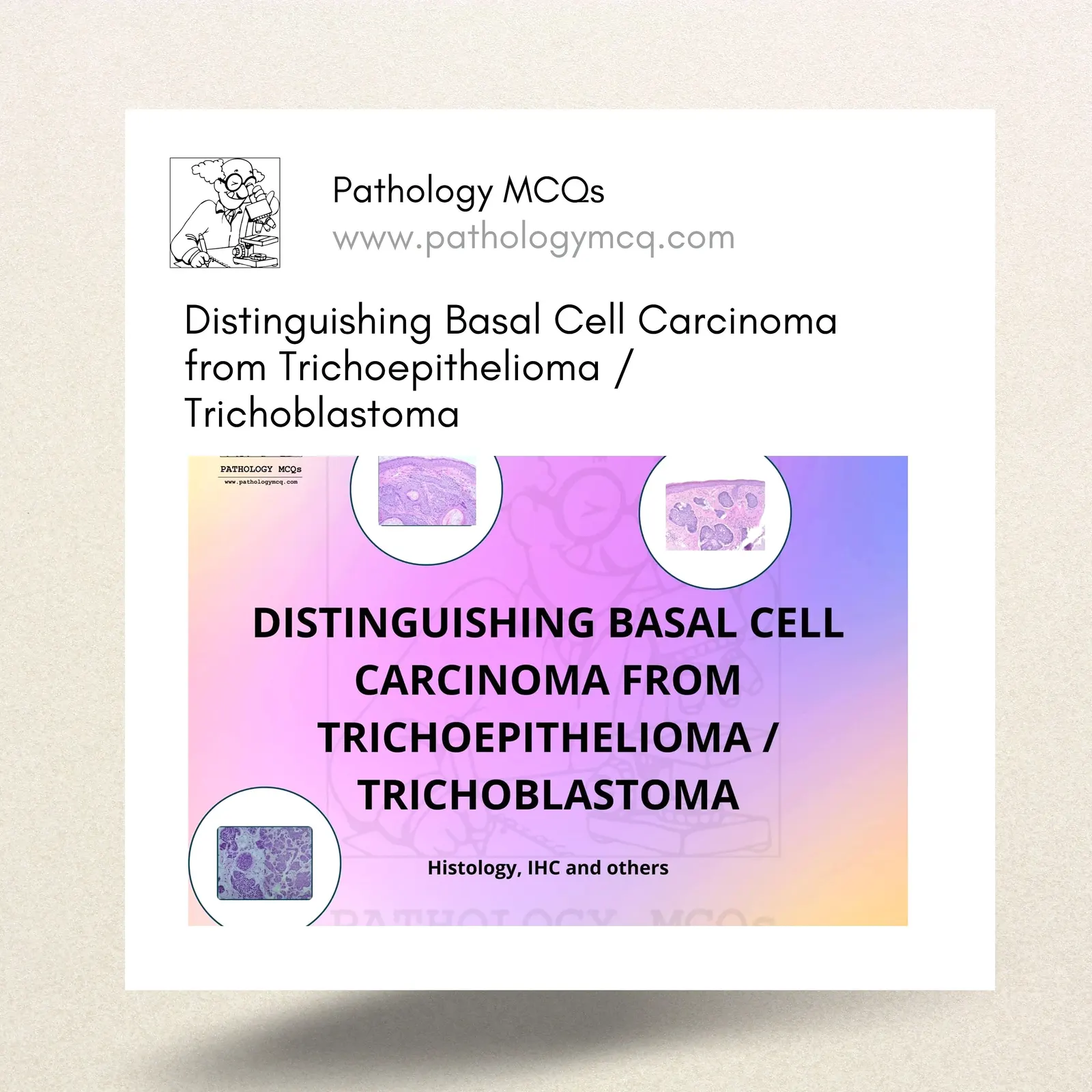
Basal Cell Carcinoma (BCC) and Trichoepithelioma/Trichoblastoma are two distinct skin neoplasms that often present diagnostic challenges due to their similar histological features. This blog aims to provide an overview of key differences based on histology, immunohistochemistry (IHC), and other criteria.
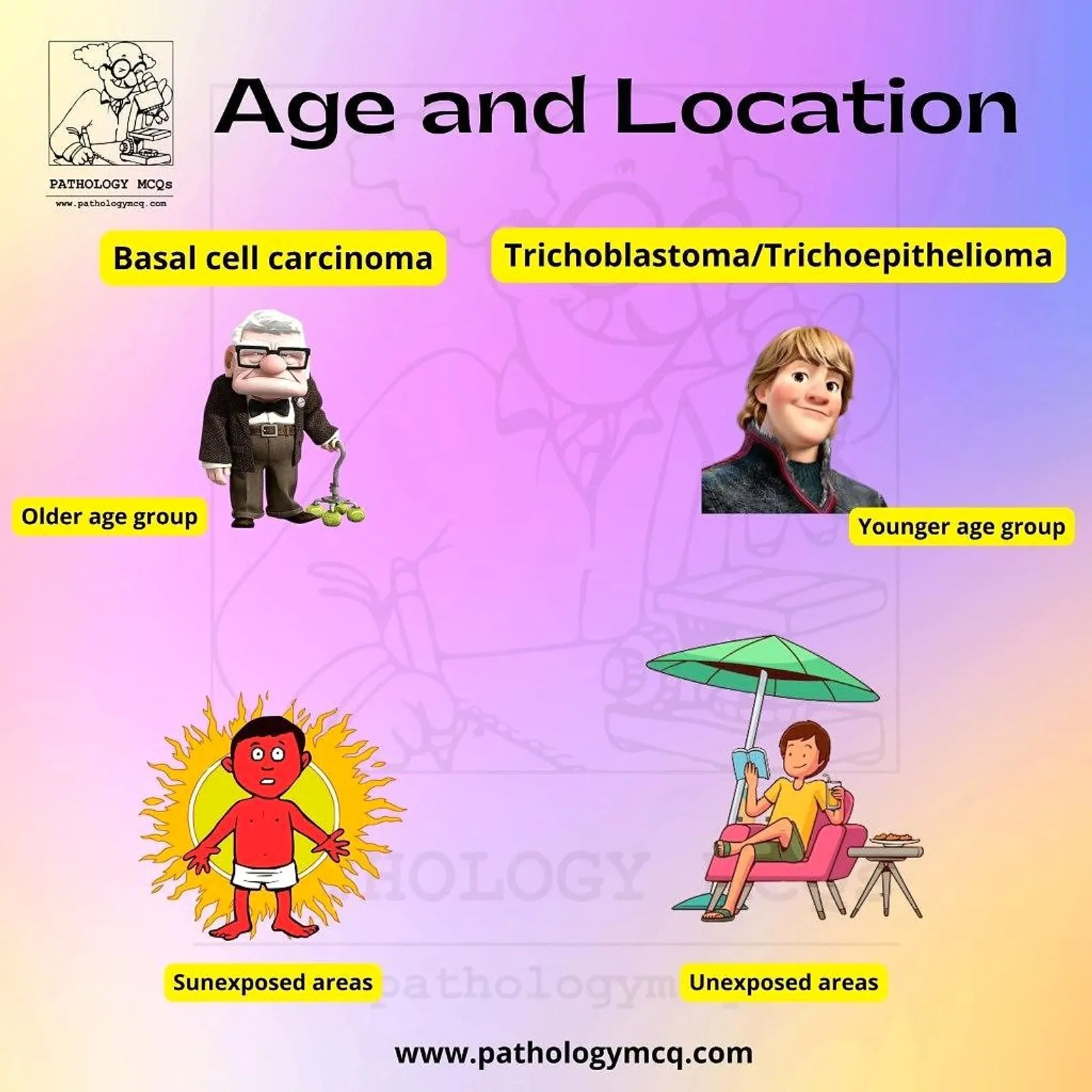
1. Age and Location:
• Basal Cell Carcinoma: Typically occurs in older age groups and is often found in sun-exposed areas.
• Trichoepithelioma/ Trichoblastoma: More common in younger individuals and usually located in unexposed areas.
2. Histological Features
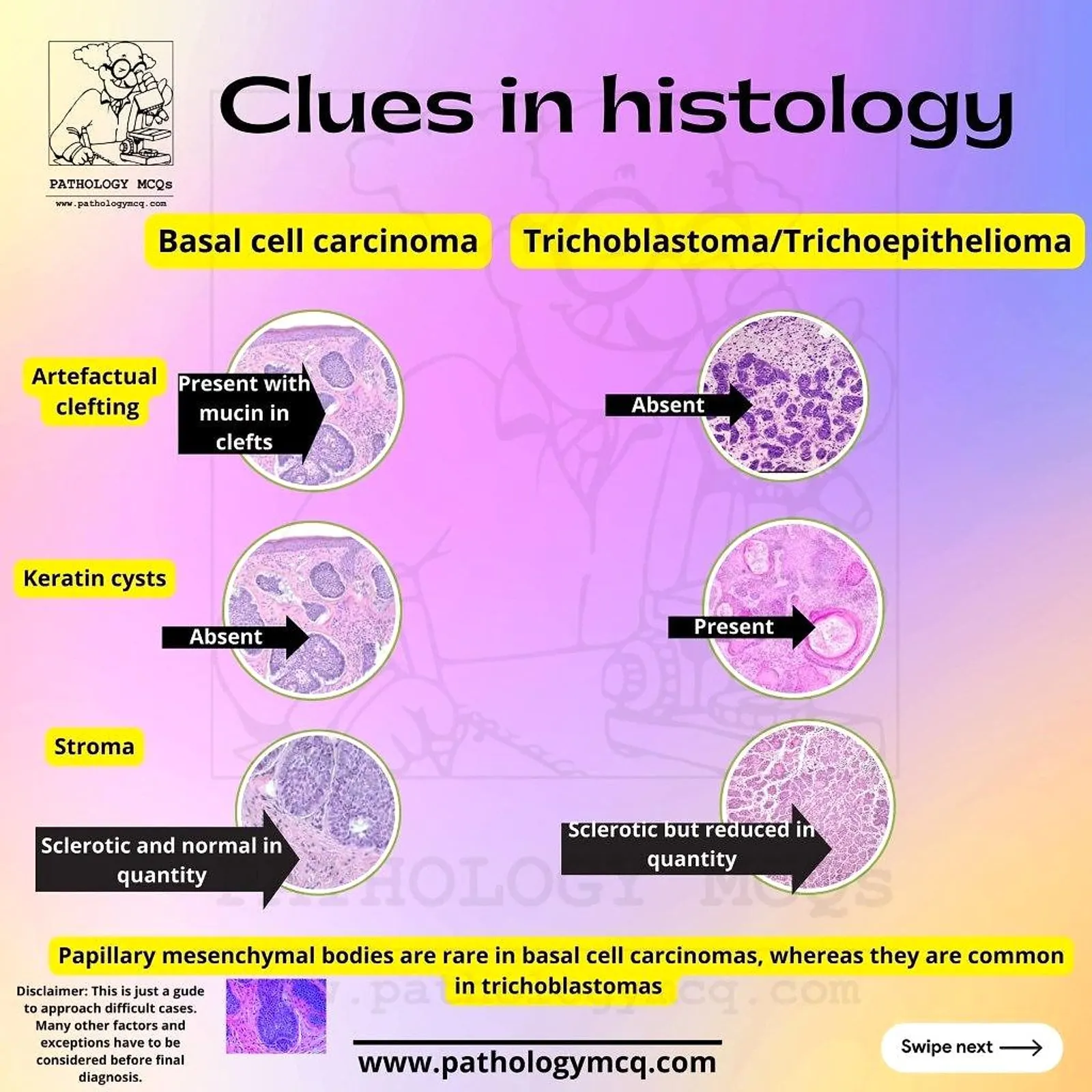
• Artefactual Clefting: Present in BCC with mucin in clefts, absent in trichoepithelioma/ trichoblastoma.
• Keratin Cysts: Absent in BCC, present in trichoepithelioma/trichoblastoma.
• Stroma: Sclerotic and normal in quantity in BCC; sclerotic but reduced in quantity in trichoepithelioma/trichoblastoma. OFTEN A MYXOID APPEARING STROMA MAY BE IDENTIFIED IN BASAL CELL CARCINOMAS
• Papillary Mesenchymal Bodies: Rare in BCC but common in trichoepithelioma/trichoblastoma.
3. Immunohistochemical (IHC) Markers
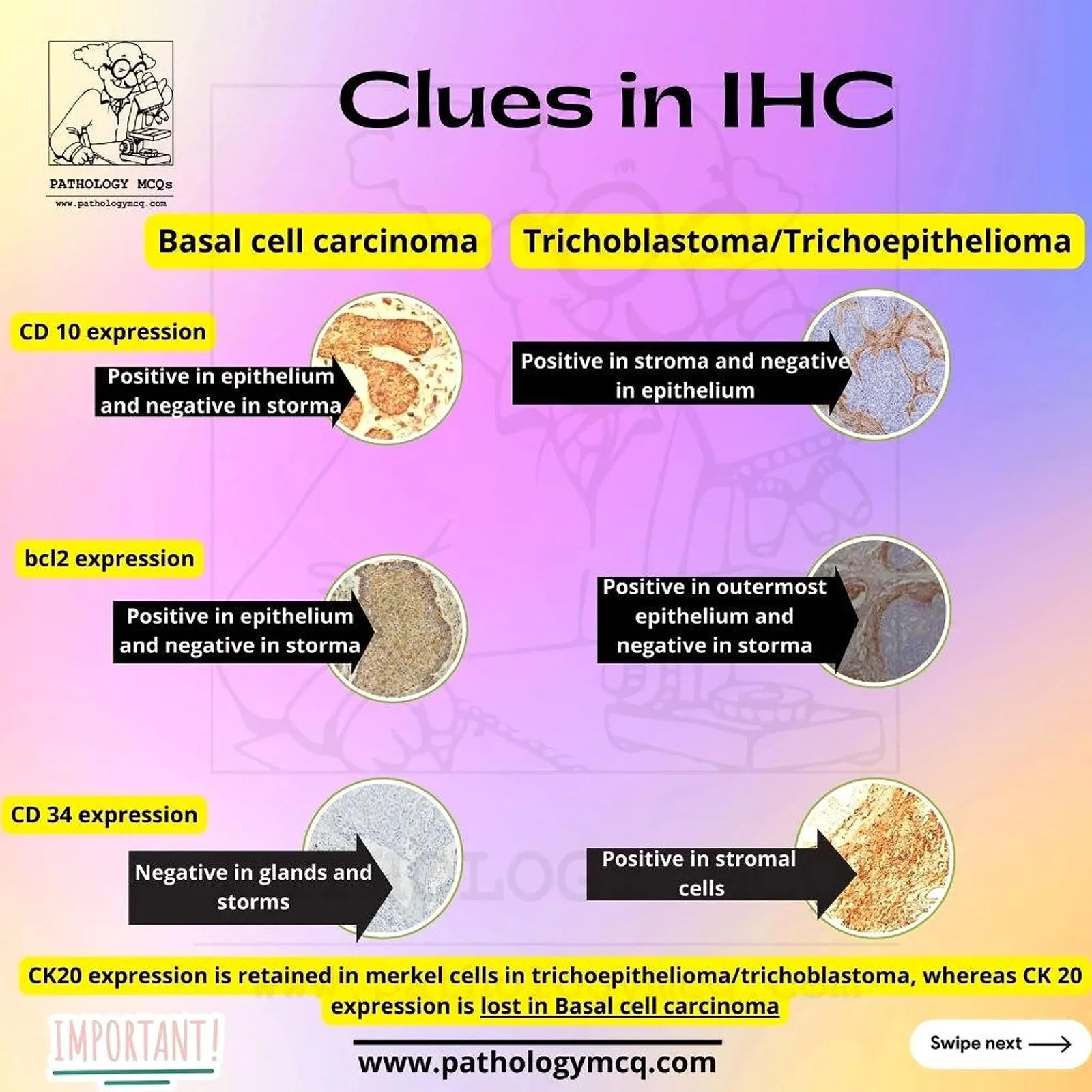
• CD 10 Expression: Positive in BCC epithelium and negative in stroma; positive in trichoepithelioma/trichoblastoma stroma and negative in epithelium.
• bcl2 Expression: Positive in BCC epithelium and negative in stroma; positive in outermost trichoepithelioma/trichoblastoma epithelium and negative in stroma.
• CD 34 Expression: Negative in BCC glands and stroma; positive in trichoepithelioma/trichoblastoma stromal cells.
• CK20 Expression: Retained in Merkel cells in trichoepithelioma/trichoblastoma but lost in BCC.
4. Additional Histological Findings which are common to both conditions
• Peripheral Palisading: Seen in both conditions.
• Ki-67 Labelling Index: Can be high in both conditions.
• Calcifications: Seen in both conditions.
• BerEp4 IHC: May be positive in both conditions.

These features are crucial in differentiating BCC from trichoepithelioma/trichoblastoma. However, it is important to consider other factors and exceptions before final diagnosis.
5. References:
1. Skin adnexal neoplasms - Part 1: An approach to tumors of the pilosebaceous unit.
2. Trichoblastomas Mimicking Basal Cell Carcinoma: The Importance of Identification and Differentiation.
Try to answer this question?
Which of these findings favour basal cell carcinoma over trichoepithelioma?
Answer and explanation
Correct answer is artefactuall clefting along with mucin in the clefts. Trichoepitheliomas may show some artifactual clefts, but mucin filled clefts are rare.