
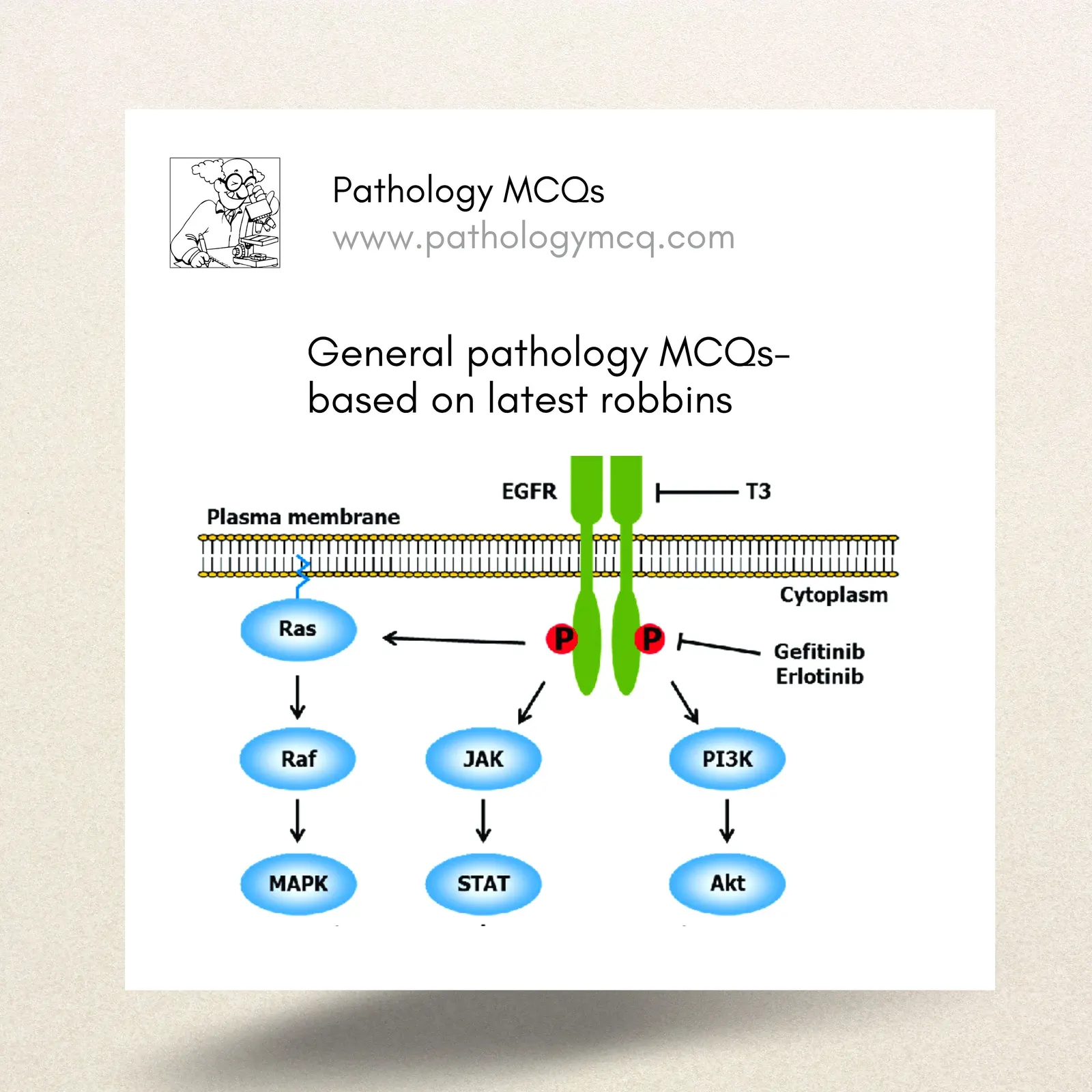
Growth factors are small but mighty molecules that govern the essential processes of cellular life — growth, repair, migration, and survival. When functioning properly, they ensure seamless tissue regeneration and immune balance. But when dysregulated, they drive cancer, fibrosis, and congenital anomalies. For exam prep and clinical reasoning, understanding these pathways is non-negotiable.
- What Are Growth Factors?
- Growth Factor Receptors: The Cellular Switchboards
- Pathological Relevance
- Signal Flow Snapshot
- Key takeaways:
- Take up our quiz!
- FAQs: Growth Factors & Receptors in General Pathology
What Are Growth Factors?
Growth factors are secreted peptides or proteins that bind to cell surface receptors and activate intracellular signaling cascades. Their primary actions include:
- Stimulating cell division and proliferation
- Enhancing wound healing and angiogenesis
- Promoting cell differentiation
- Preventing apoptosis (programmed cell death)
Tired of skimming through pages and pages of content?
Get our General Pathology Chapter Wise notes NOW!!
Key Growth Factors and Functions
| Growth Factor | Source | Primary Functions |
| EGF | Macrophages, salivary glands | Epithelial proliferation and repair |
| TGF-α | Macrophages, keratinocytes | Hepatocyte and epithelial growth |
| HGF | Fibroblasts | Hepatocyte proliferation, motility |
| VEGF | Mesenchymal cells | Angiogenesis, vascular permeability |
| PDGF | Platelets, macrophages | Chemotaxis, ECM protein synthesis |
| FGFs (FGF-1, FGF-2) | Macrophages, mast cells | Angiogenesis, fibroblast growth |
| TGF-β | Platelets, T cells | Fibrosis, immune suppression |
| KGF (FGF-7) | Fibroblasts | Keratinocyte migration/differentiation |

Growth Factor Receptors: The Cellular Switchboards
Growth factors bind transmembrane receptors, which typically contain intrinsic or associated tyrosine kinase activity. Upon ligand binding, they undergo dimerization and autophosphorylation, triggering downstream signaling.
Receptor Types & Pathways
| Receptor Type | Function |
| RTKs (e.g., EGFR, FGFR) | Trigger MAPK and PI3K/AKT pathways for growth and survival |
| Non-Receptor Kinases (e.g., Src) | Mediate adhesion, transcription, immune signaling |
| GPCRs | Activate G-proteins → cAMP/IP3 → calcium mobilization |
| Nuclear Receptors | Bind lipid-soluble ligands → direct gene regulation |
| Notch | Ligand-induced cleavage → nuclear signaling |
| Wnt/Frizzled | β-catenin stabilization → transcription activation |
Pathological Relevance
- Cancer: EGFR mutations → lung & colorectal cancer; VEGF → tumor angiogenesis
- Fibrosis: TGF-β overexpression → cirrhosis, IPF, systemic sclerosis
- Developmental Disorders: FGFR3 mutations → achondroplasia
- Therapeutic Targets: Bevacizumab (anti-VEGF), Osimertinib (EGFR T790M), Erdafitinib (FGFR2/3)
Signal Flow Snapshot
- Ligand binding → Receptor dimerization → Tyrosine autophosphorylation
- Downstream cascades:
- MAPK/ERK → Cell proliferation
- PI3K/AKT → Cell survival
- JAK/STAT → Differentiation and immune modulation

Key takeaways:
Growth factors and their receptors aren’t just molecular trivia — they form the backbone of how cells communicate, adapt, and survive. In disease, these pathways become therapeutic targets. In exams, they’re high-yield. In real life, they’re clinical gold.
Take up our quiz!
Our Top-Picks just for you!
Explore our other expertly designed pathology products—crafted by specialists to elevate your learning experience.
Join our telegram channel for regular updates- Pathology mcqs
FAQs: Growth Factors & Receptors in General Pathology
Q1: What are growth factors in pathology?
A: Growth factors are signaling proteins that regulate cell growth, differentiation, survival, and healing, especially after tissue injury.
Q2: What is the role of VEGF in cancer?
A: VEGF (Vascular Endothelial Growth Factor) promotes angiogenesis, helping tumors form new blood vessels to support their growth.
Q3: Which mutation causes achondroplasia?
A: Achondroplasia is caused by a gain-of-function mutation in the FGFR3 gene, which inhibits cartilage proliferation.
Q4: How do receptor tyrosine kinases (RTKs) work?
A: RTKs are activated by ligand-induced dimerization and autophosphorylation, triggering signaling pathways like MAPK and PI3K/AKT.
Q5: What is the function of TGF-β in fibrosis?
A: TGF-β stimulates fibroblasts to produce collagen and extracellular matrix proteins, leading to tissue fibrosis.
Q6: What drugs target EGFR in colorectal cancer?
A: Cetuximab is a monoclonal antibody that inhibits EGFR, commonly used in EGFR-positive colorectal cancer treatment.