
Detailed, exam-oriented review of sinonasal papilloma histopathology covering inverted, oncocytic and exophytic types, HPV association, molecular features and MCQs.
Author: Pathology MCQ Team
Category: Head & Neck Pathology
Last Updated: 2025
Read Time: 16 minutes
This is a medical, educational and exam-oriented pathology review focused on histopathology, diagnostic criteria, molecular hallmarks and competitive exam relevance.
At a Glance
| Focus Area | High-Yield Points |
|---|---|
| Topic | Sinonasal papilloma histopathology |
| Types | Inverted, oncocytic, exophytic |
| Key Differentiators | Growth pattern, epithelium, HPV |
| Molecular Hallmarks | EGFR, RAS mutations |
| Exams | NEET-SS, FRCPath, MD Pathology |
Table of Contents
- What is sinonasal papilloma?
- Types of sinonasal papilloma
- Inverted sinonasal papilloma histology
- Oncocytic sinonasal papilloma
- Exophytic sinonasal papilloma
- Sinonasal papilloma HPV association
- Differential diagnosis
- MCQs
- Exam Pearl
- Key Takeaway
- Recommended Learning
What is sinonasal papilloma?
Sinonasal papilloma is a benign epithelial neoplasm arising from Schneiderian mucosa of the nasal cavity and paranasal sinuses.
Key Facts
- Origin: Ectoderm-derived Schneiderian epithelium
- Behavior: Locally aggressive
- Clinical concern: Recurrence and malignant transformation
Sinonasal papilloma pathology is unique because the mucosa of origin differs embryologically from the rest of the respiratory tract.
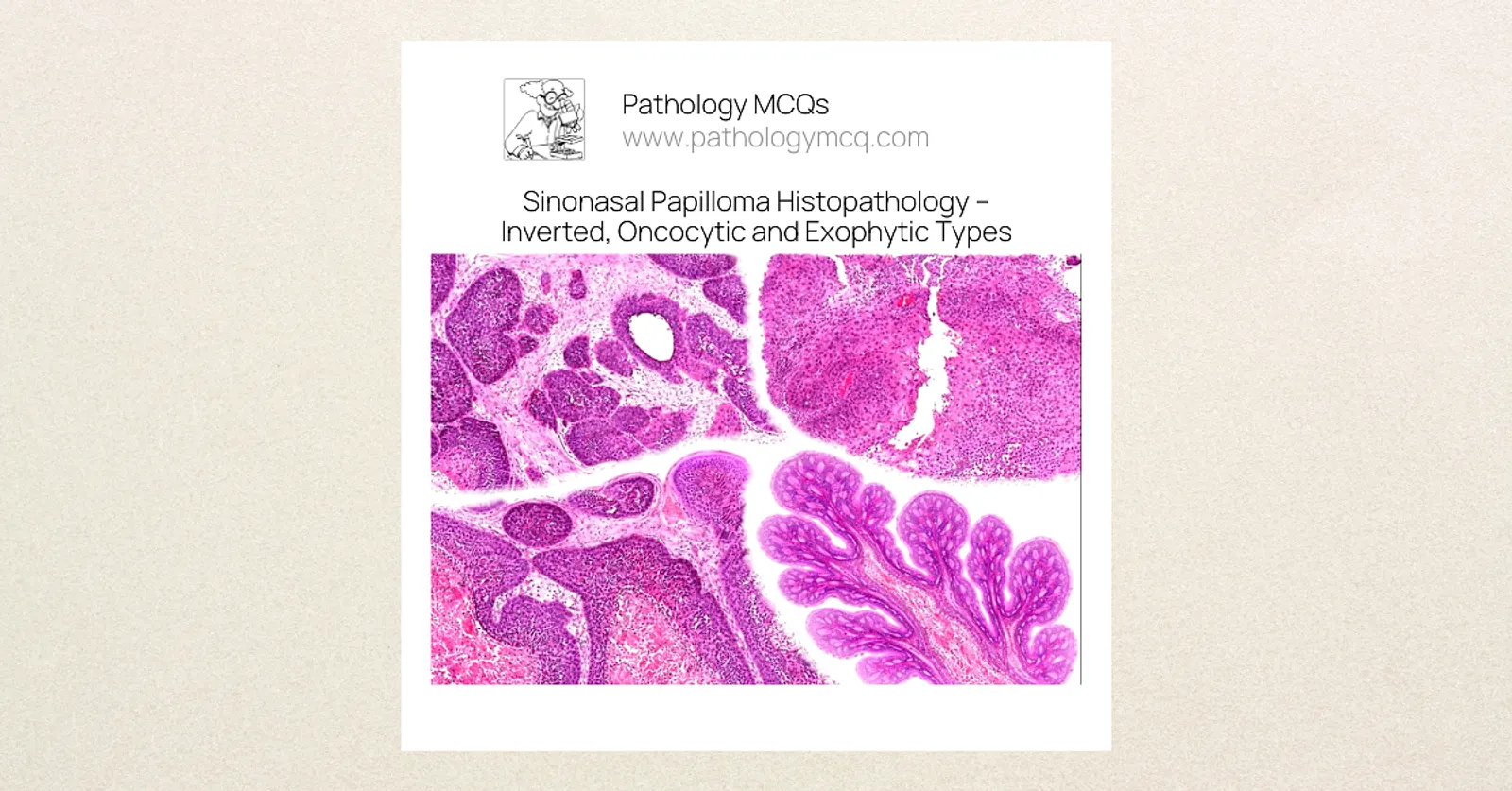
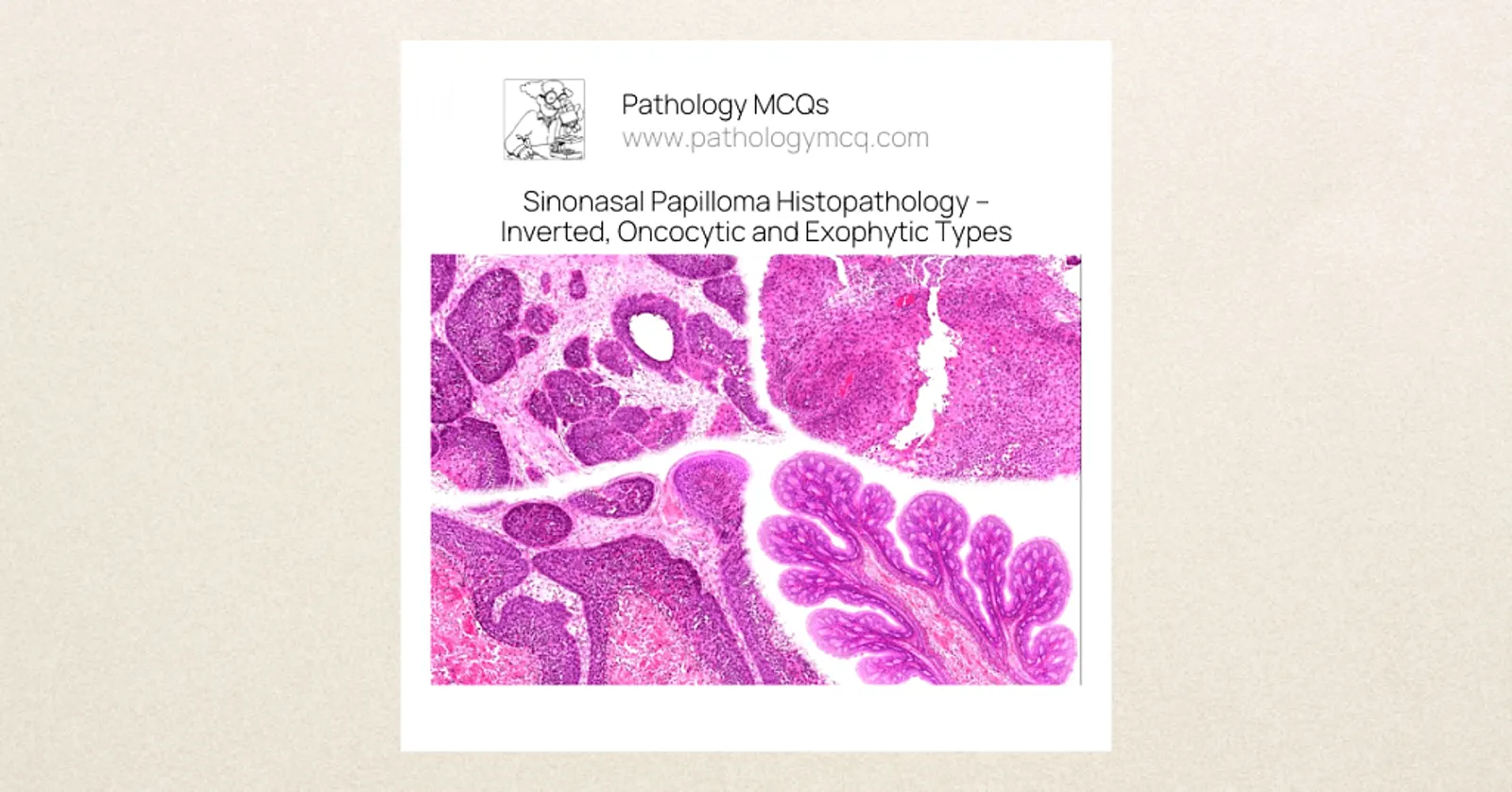
This composite slide demonstrates the three WHO-recognized types of sinonasal papilloma. Differences in epithelial thickness, direction of growth and cytoplasmic features allow accurate classification during routine histopathologic examination.
What are the types of sinonasal papilloma?
Sinonasal papilloma is classified into three types based on growth pattern and epithelial differentiation.
| Type | Growth Pattern | Epithelium | HPV Status | Molecular Feature |
|---|---|---|---|---|
| Inverted | Endophytic | Non-keratinizing | Positive | EGFR mutation |
| Oncocytic | Papillary | Oncocytic | Negative | RAS mutation |
| Exophytic | Outward | Keratinizing | Positive | None identified |
This classification is central to sinonasal papilloma histopathology.
What is inverted sinonasal papilloma histology?
Inverted sinonasal papilloma histology shows endophytic downward growth of thick non-keratinizing epithelium into the stroma.
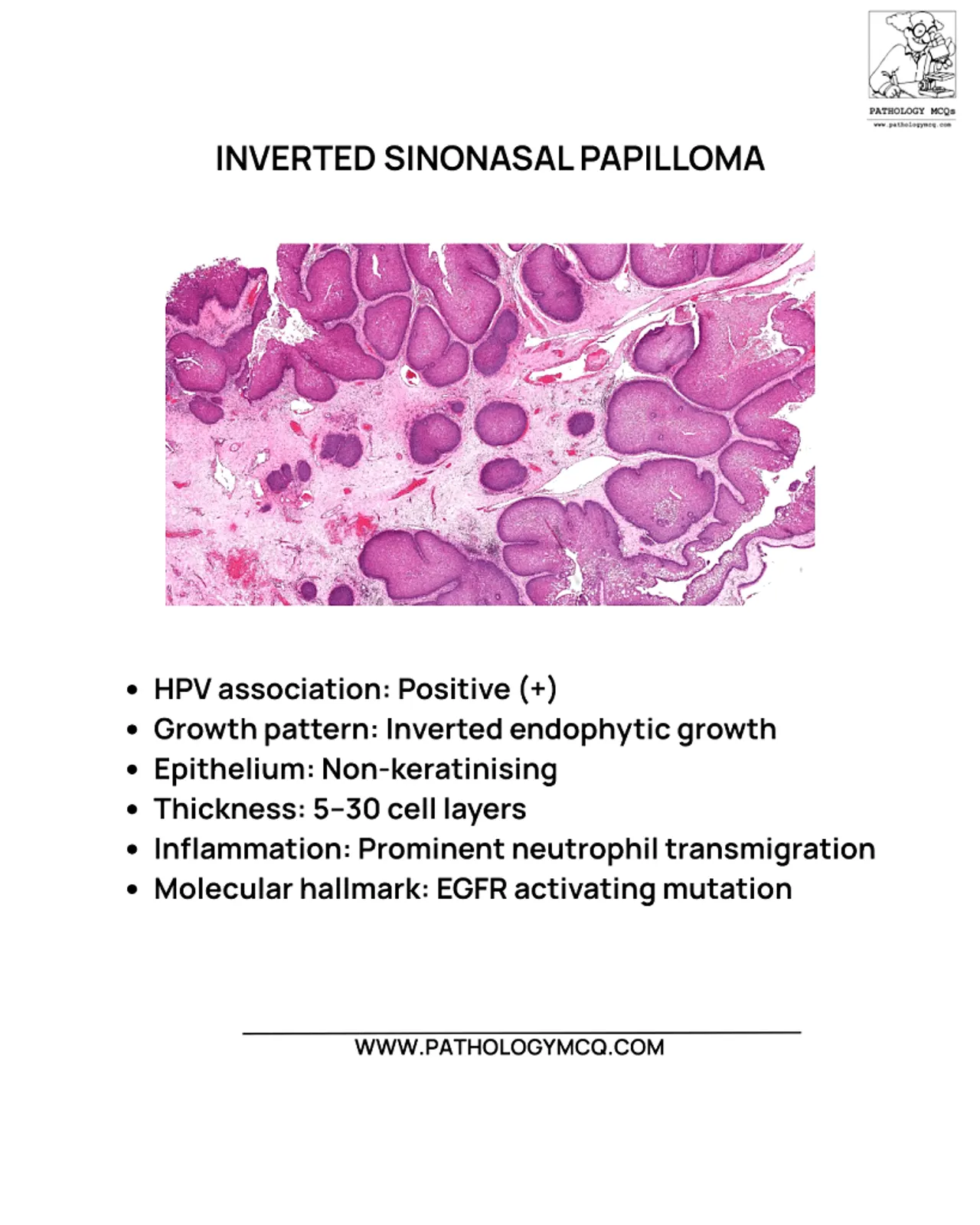
The slide shows rounded epithelial nests growing into the stroma with prominent neutrophil transmigration. The epithelial thickness ranges from 5–30 cell layers, a defining feature of inverted sinonasal papilloma.
Histologic Features
- Growth: Endophytic (inverted)
- Epithelium: Non-keratinizing squamous
- Inflammation: Neutrophilic microabscesses
- HPV: Positive
- Molecular hallmark: EGFR activating mutation
Clinical Relevance
- Highest recurrence rate
- Greatest risk of squamous cell carcinoma transformation
What is oncocytic sinonasal papilloma?
Oncocytic sinonasal papilloma is composed of oncocytic epithelial cells with eosinophilic granular cytoplasm due to mitochondrial accumulation.
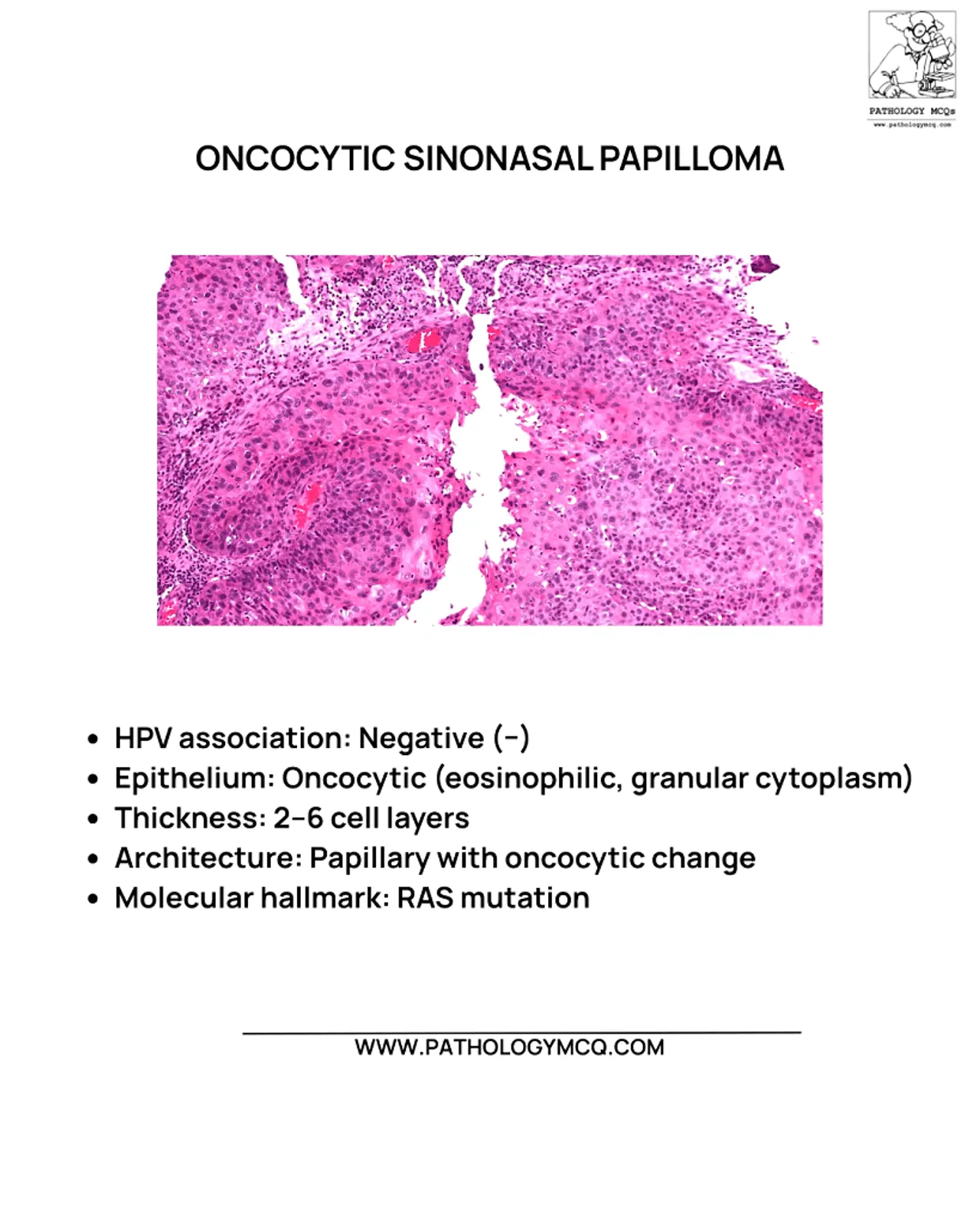
Papillary fronds lined by oncocytic cells with abundant eosinophilic granular cytoplasm. The epithelium is thin, usually 2–6 cell layers.
Histologic Features
- Epithelium: Oncocytic
- Thickness: 2–6 layers
- HPV: Negative
- Molecular hallmark: RAS mutation
- Architecture: Papillary
What is exophytic sinonasal papilloma?
Exophytic sinonasal papilloma shows outward papillary proliferation into the nasal cavity lumen.
Finger-like papillary projections composed of keratinizing squamous epithelium surrounding fibrovascular cores.
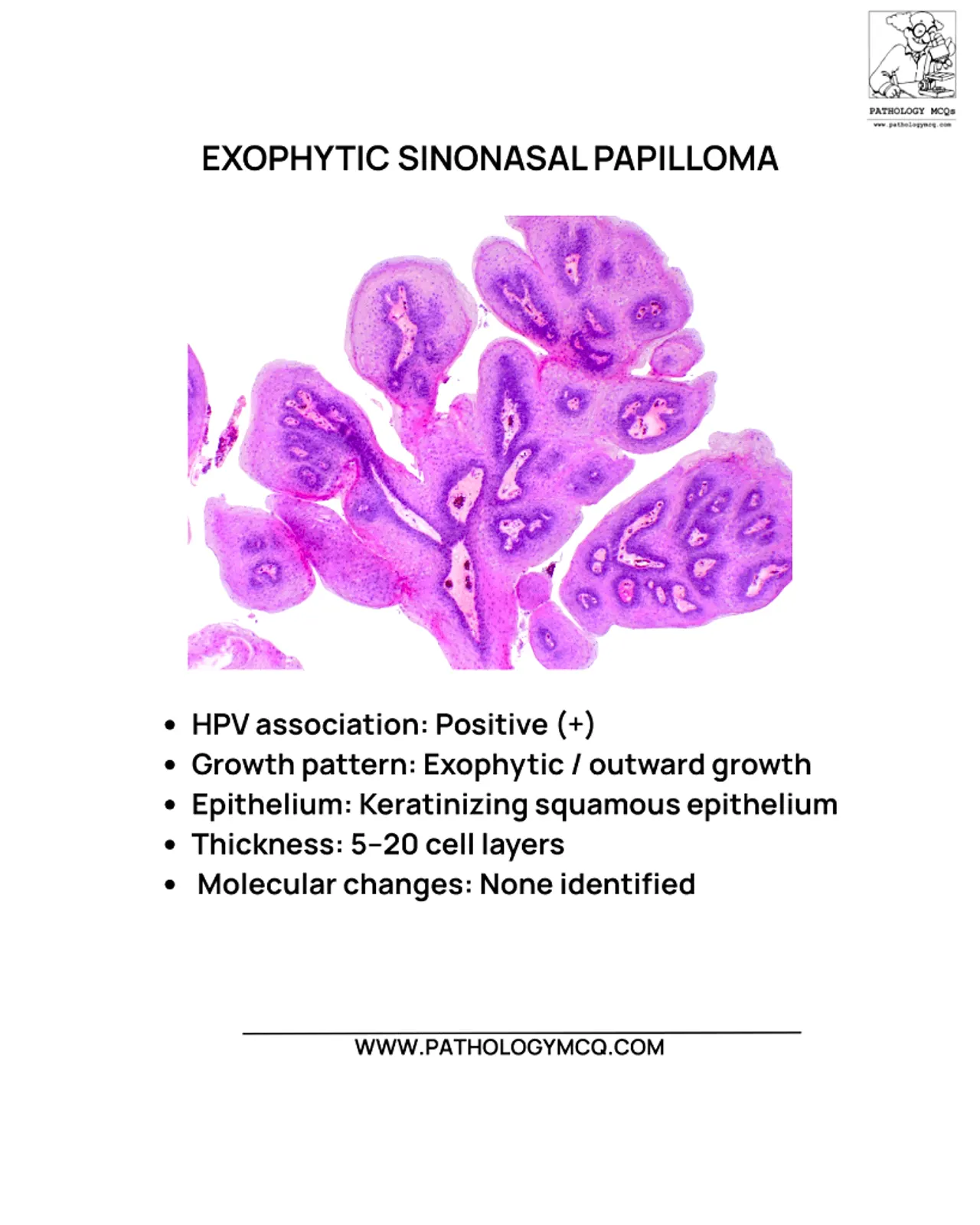
Histologic Features
- Growth: Exophytic
- Epithelium: Keratinizing squamous
- Thickness: 5–20 layers
- HPV: Positive
- Molecular changes: None identified
What is sinonasal papilloma HPV association?
HPV infection is associated with inverted and exophytic sinonasal papilloma but absent in oncocytic papilloma.
| Type | HPV Status |
|---|---|
| Inverted | Positive |
| Exophytic | Positive |
| Oncocytic | Negative |
Differential Diagnosis
Key differentials in sinonasal papilloma pathology include:
- Squamous cell carcinoma
- Verrucous carcinoma
- Respiratory epithelial adenomatoid hamartoma
- Sinonasal adenocarcinoma
Absence of stromal invasion distinguishes papilloma from carcinoma.
High - yield MCQS
[qsm quiz=528]Exam Pearl
Inverted sinonasal papilloma shows endophytic growth, EGFR mutation and highest malignant risk.
Key Takeaway
Sinonasal papilloma histopathology is defined by growth pattern, epithelial type and HPV association.
Recommended Learning
/blog/product/approach-based-course-histopathology-and-cytology/
VIEW THE VIRTUAL SLIDE