
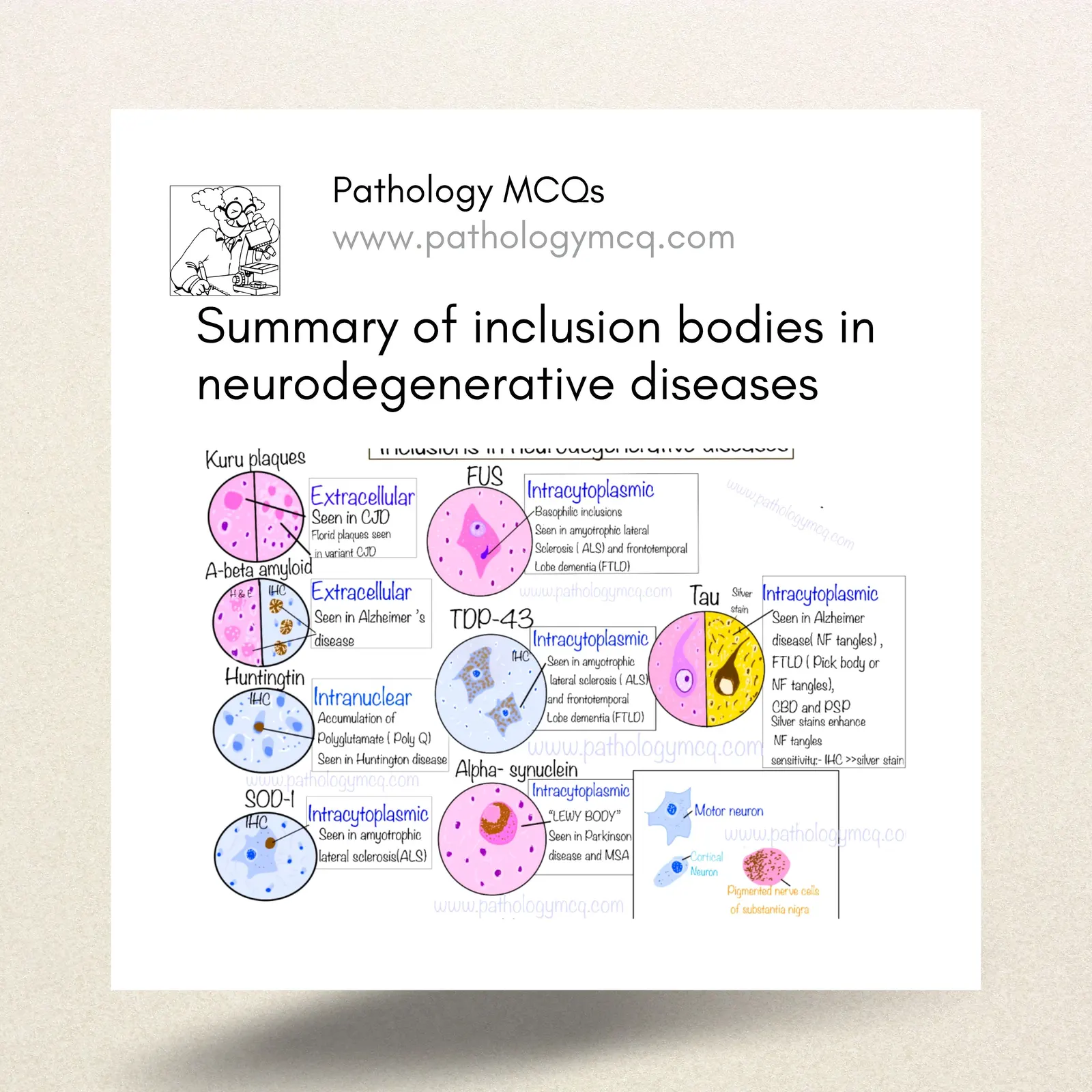
Inclusion bodies are abnormal structures that can be found within cells, and they are often associated with neurodegenerative diseases. Here's a summary of some inclusion bodies and the diseases they are linked to:
- Lewy Bodies: Lewy bodies are abnormal aggregates of protein that develop inside nerve cells. They are primarily composed of alpha-synuclein protein. Lewy bodies are a hallmark of Parkinson's disease and dementia with Lewy bodies (DLB). They are also found in some cases of Alzheimer's disease.
- Neurofibrillary Tangles (NFTs): NFTs are twisted fibers consisting mainly of a protein called tau. They are found within the brain's neurons. NFTs are strongly associated with Alzheimer's disease, where they disrupt the normal functioning of neurons and contribute to cell death.
- Huntington's Disease Inclusion Bodies (HIBs): HIBs are aggregates of mutated huntingtin protein found within the neurons of individuals with Huntington's disease. These inclusion bodies play a role in the progressive degeneration of specific brain regions, leading to the characteristic symptoms of the disease, such as involuntary movements and cognitive decline.
- Tau Inclusions: Apart from forming NFTs, abnormal tau protein can aggregate in other forms, such as tau inclusions or neuropil threads. These are seen in several neurodegenerative diseases collectively referred to as tauopathies. Examples include progressive supranuclear palsy (PSP), corticobasal degeneration (CBD), and some forms of frontotemporal dementia (FTD).
- Gliosis and Glial Cytoplasmic Inclusions (GCIs): In diseases like Multiple System Atrophy (MSA), abnormal protein aggregates, particularly alpha-synuclein, accumulate not only within neurons but also in glial cells. These aggregates, known as GCIs, contribute to the degeneration of both neurons and glial cells, leading to the characteristic symptoms of MSA, including autonomic dysfunction and movement impairments.
These inclusion bodies represent abnormal protein aggregation processes within neurons and other cells of the nervous system. Understanding their formation and role in disease pathology is crucial for developing effective therapies for neurodegenerative diseases.
Some common inclusion bodies and related conditions are summarized in the image