
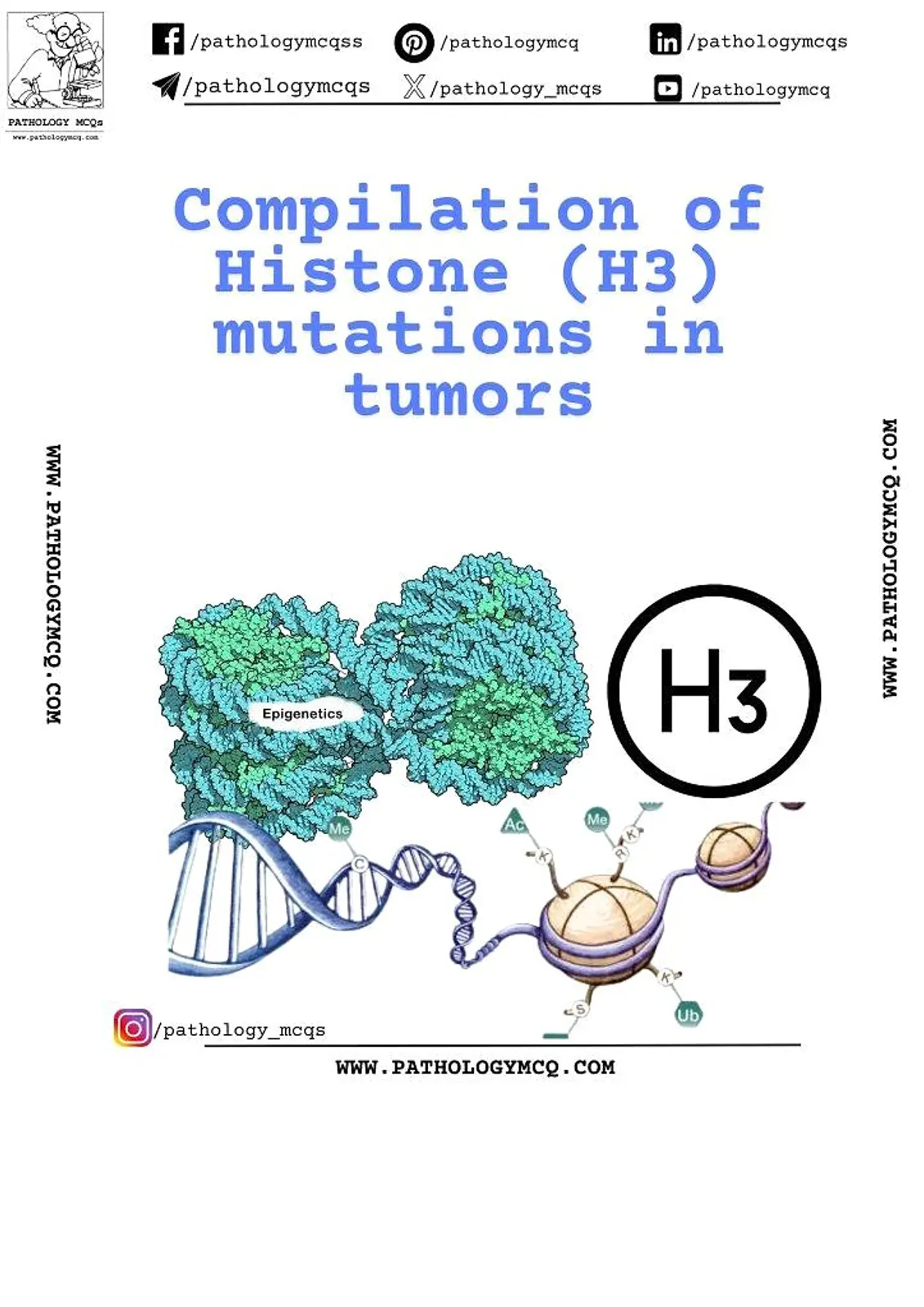
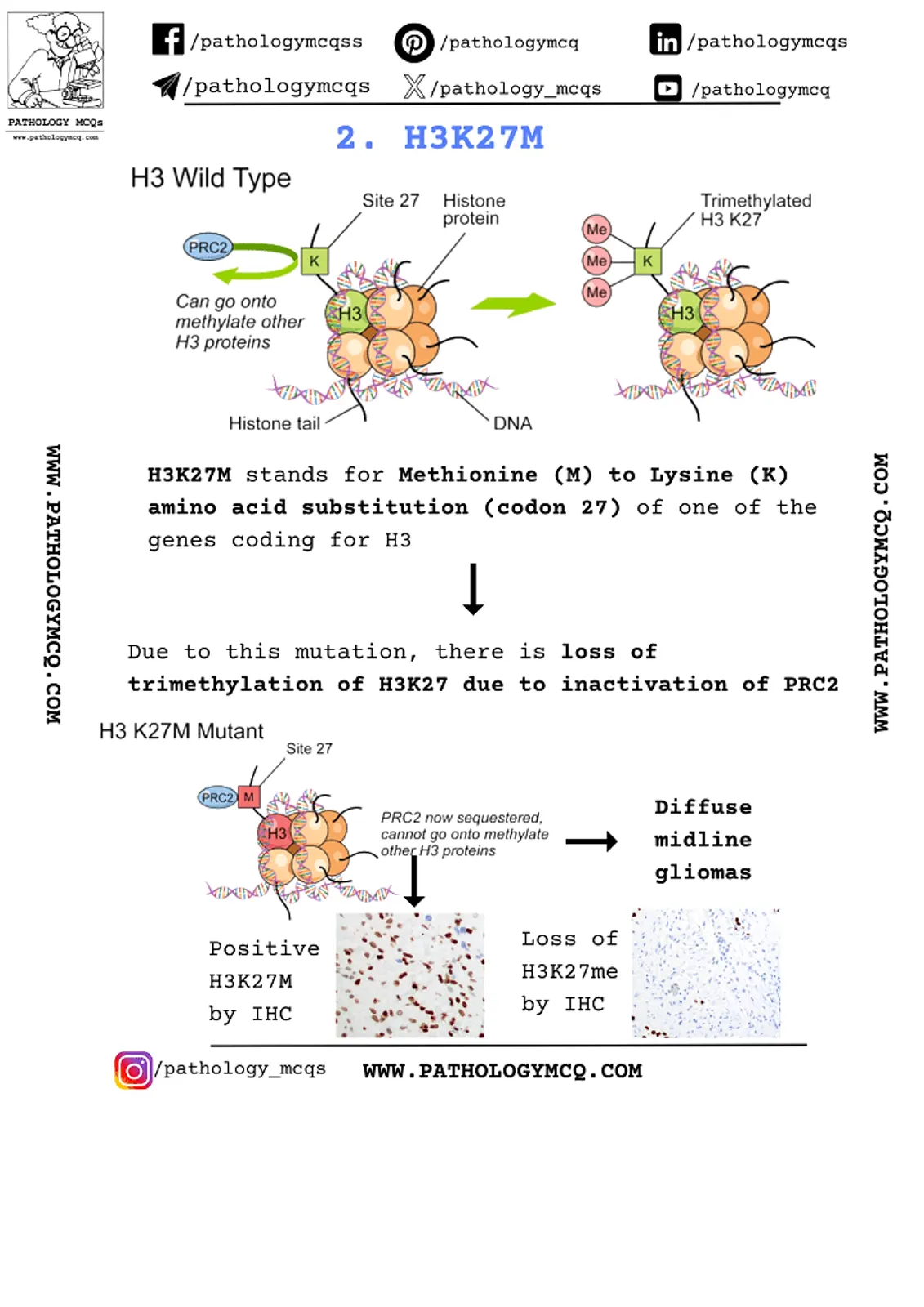
Histone H3 mutations are significant in the context of certain tumors, particularly pediatric high-grade gliomas (HGGs) and other cancers. These mutations occur in the genes encoding the histone H3 proteins, which play a crucial role in the regulation of DNA structure and function. The most common mutations involve the substitution of a single amino acid, such as the replacement of lysine with methionine at position 27 (H3K27M) or glycine with arginine at position 34 (H3G34R).
Conditions Associated with Histone H3 Mutations
Epithelioid MPNST
H3K27me loss is identified.
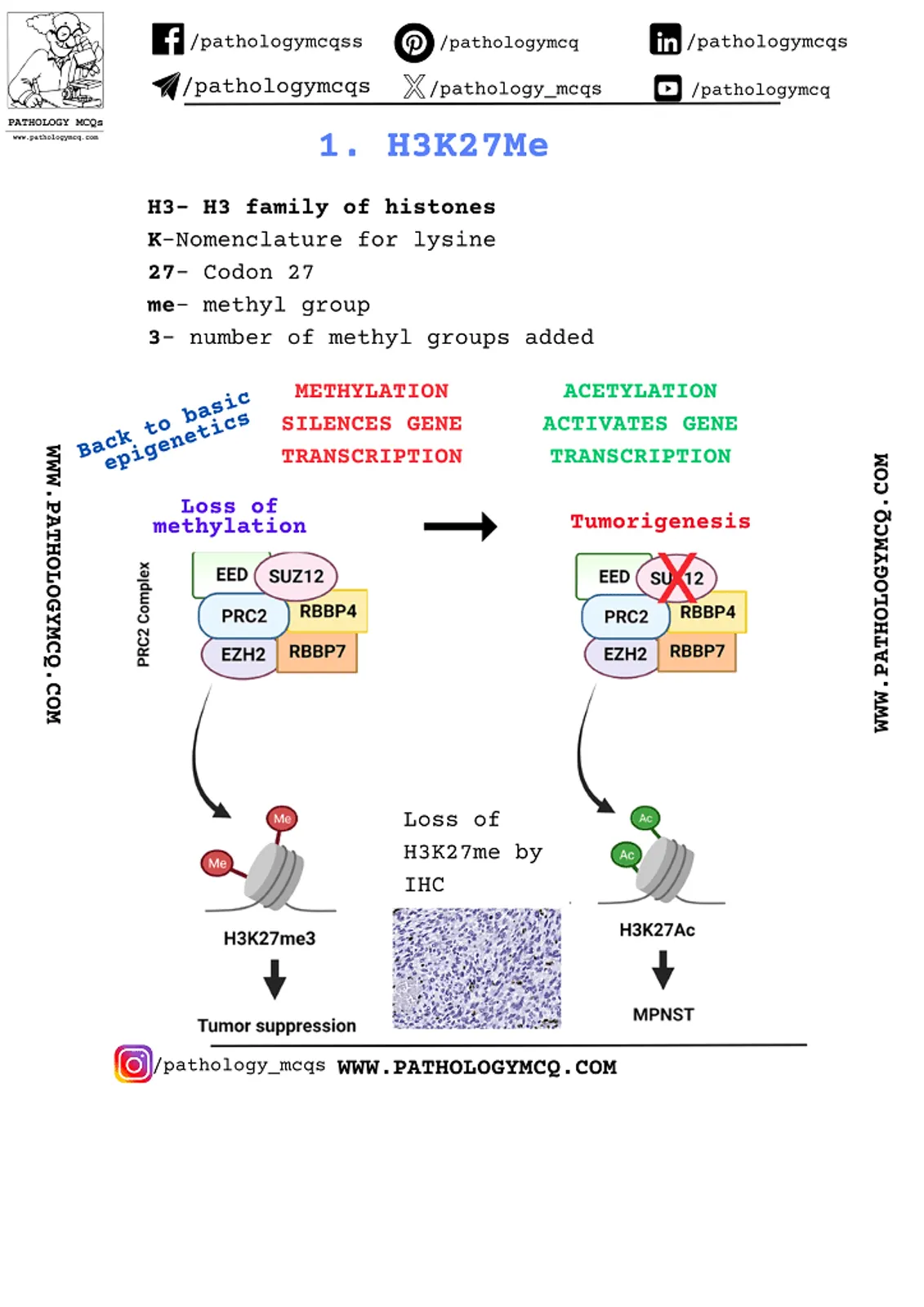
- Diffuse Midline Gliomas (DMGs)
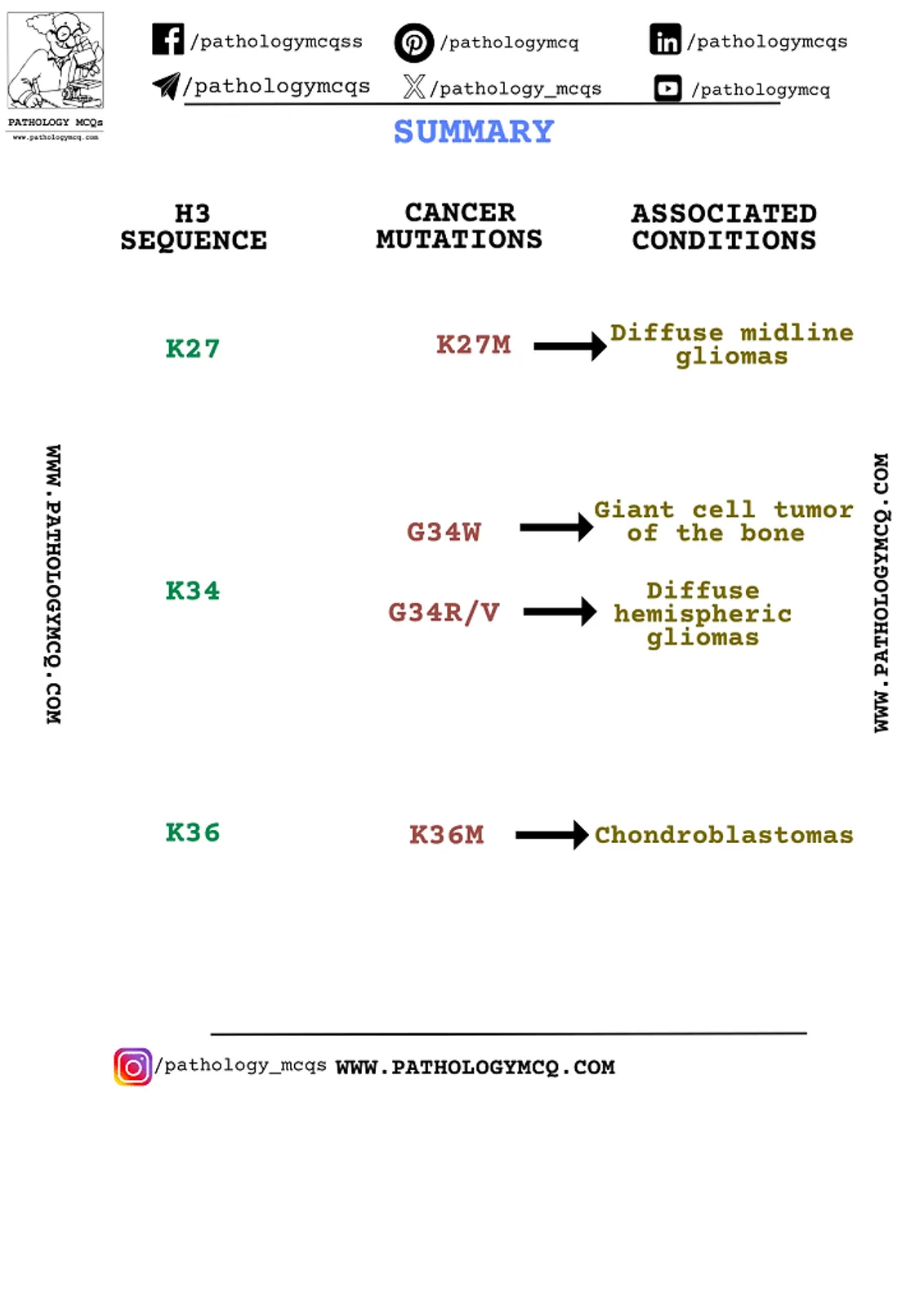
- H3K27M Mutation: Predominantly found in DMGs, especially in the brainstem (e.g., pontine gliomas).
- Clinical Impact: Highly aggressive, poor prognosis, primarily affects children and young adults.
- Pediatric High-Grade Gliomas (HGGs)
- Common Mutations: H3K27M and H3G34R/V.
- Location: Often found in the thalamus and spinal cord (for H3K27M), and cerebral hemispheres (for H3G34R/V).
- Prognosis: Generally poor, with distinct molecular subgroups defined by histone mutations.
- Pediatric Low-Grade Gliomas
- H3F3A Mutations: Less common but can occur.
- Clinical Course: Generally better prognosis compared to high-grade gliomas.
- Gangliogliomas
- H3K27M Mutation: Rare but can be present.
- Prognosis: Variable, depends on other molecular and clinical factors.
- Ependymomas
- H3K27M Mutation: Occasional cases, contributing to poorer prognosis.
- Location: Frequently found in the posterior fossa and spinal cord.
- Acute Myeloid Leukemia (AML)
- H3 Mutations: Rare but documented, potentially impacting disease progression and treatment response.
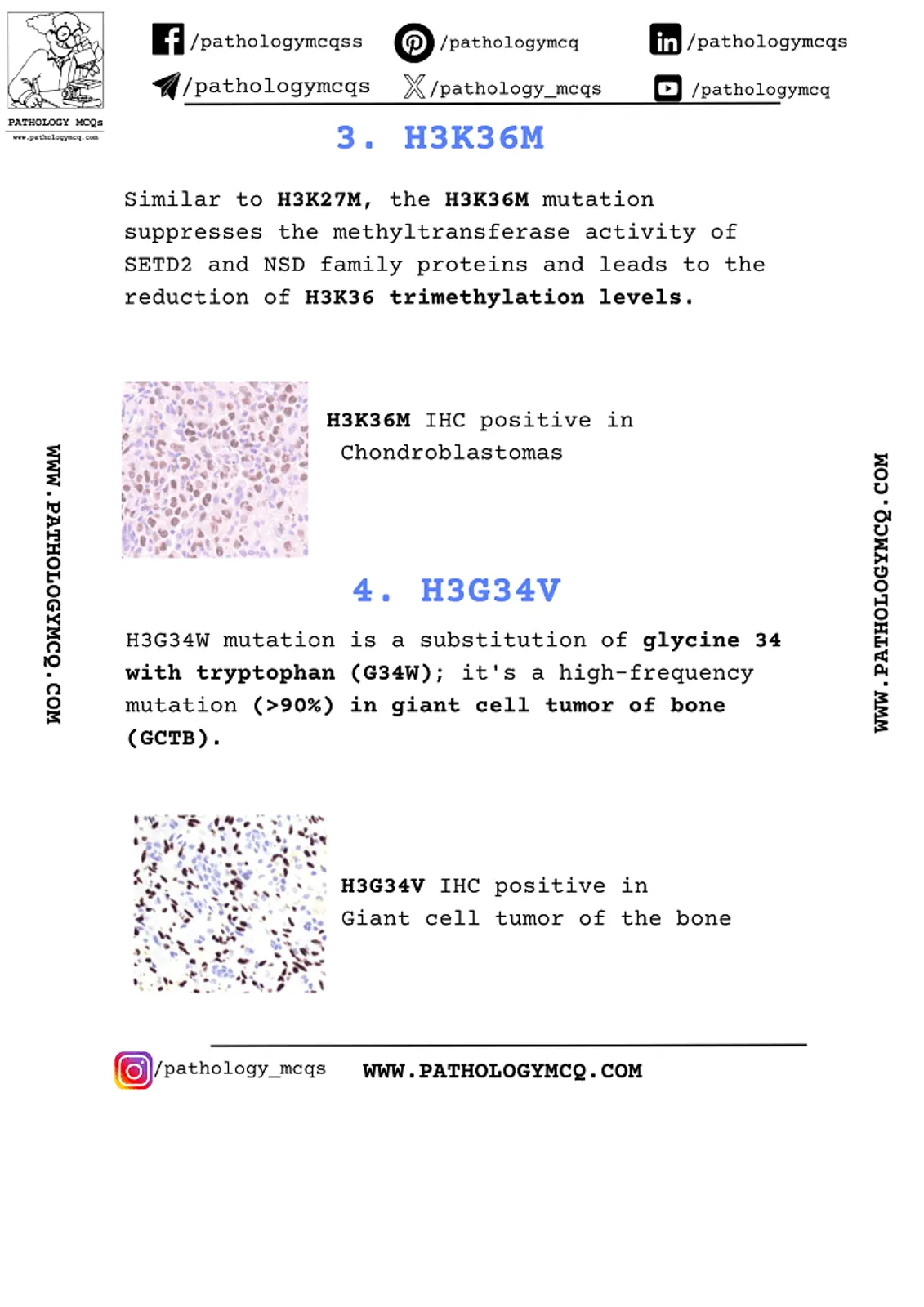
- Giant Cell Tumor of Bone (GCTB)
- H3F3A Mutation: Commonly presents with G34W mutation.
- Characteristics: Benign but locally aggressive, often affecting the epiphyses of long bones in young adults.
- Chondroblastoma
- H3F3B Mutation: Typically presents with K36M mutation.
- Features: Rare, benign bone tumor, usually in the epiphyses of long bones in adolescents and young adults.
Try to answer this question : Which of the following tumors are associated with loss of H3K27me loss?
Correct answer is A: Malignant peripheral nerve sheath tumor (MPNST)
For more MCQs like these